
Adding a Traffic Source
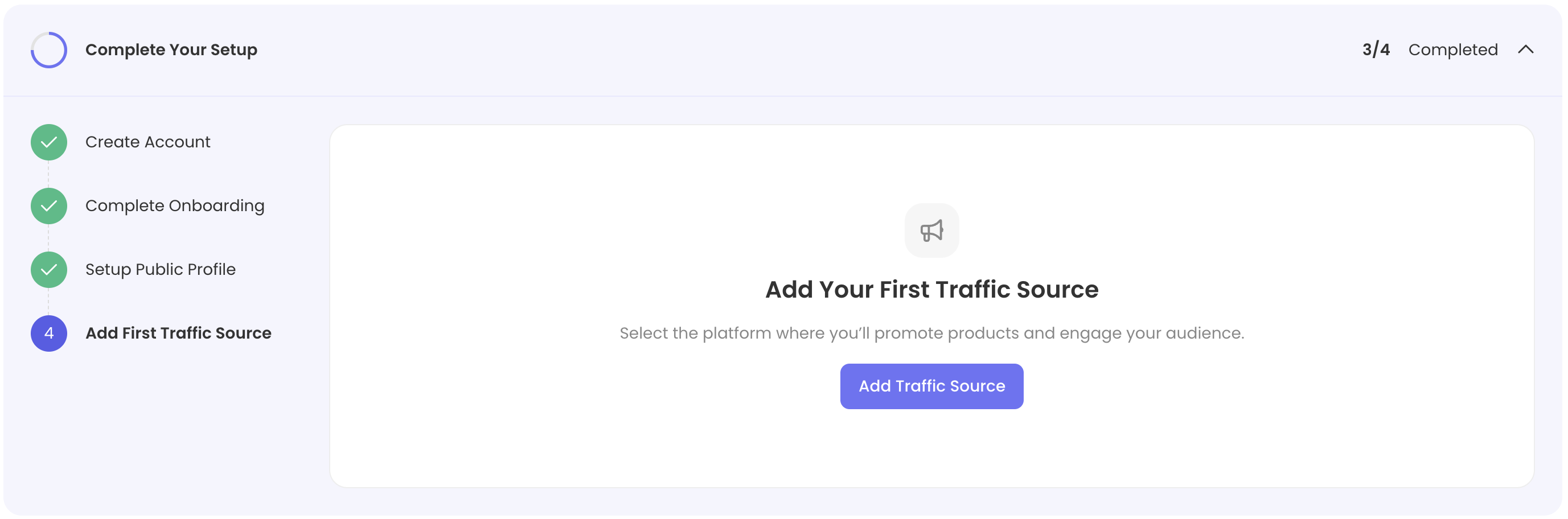
As a part of the standard onboarding process, the Katalys Marketing Platform will direct you to add your first Traffic Source to your Profile, though you are always able to add more in the Traffic Sources section later.
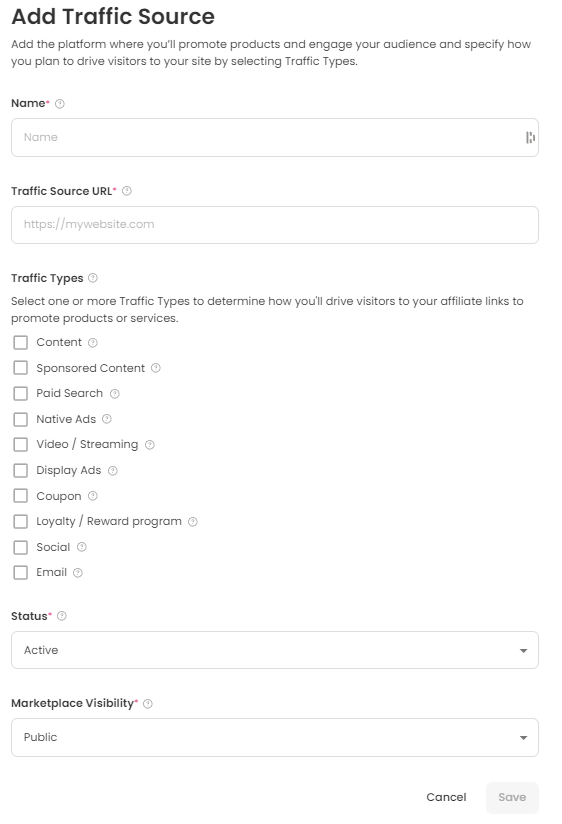
Setting up the Traffic Source, you’ll need to define:
-
Traffic Source Name (mandatory)
-
Traffic Source URL (mandatory)
-
Traffic Types (Channels; more information below) - one or multiple from the list provided:
-
e.g., Content, Paid Search, Loyalty, Social, etc.
-
-
Traffic Source Status (mandatory):
-
Active (visible on the platform, created links are active)
-
Paused (not visible on the platform, links created will no longer work)
-
-
Marketplace Visibility (mandatory):
-
Public (visible to Advertisers)
-
Private (active, but invisible for advertisers)
-
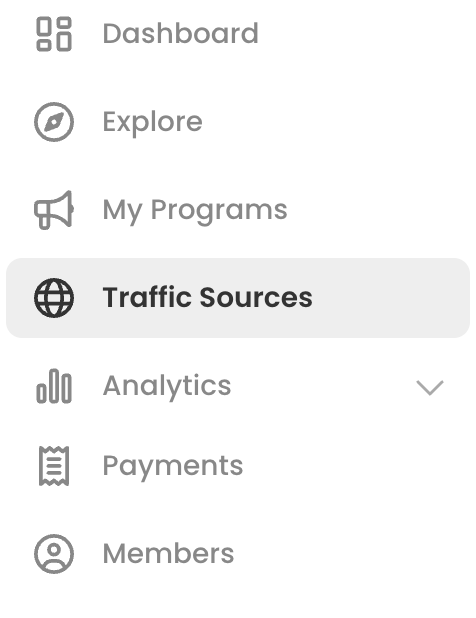
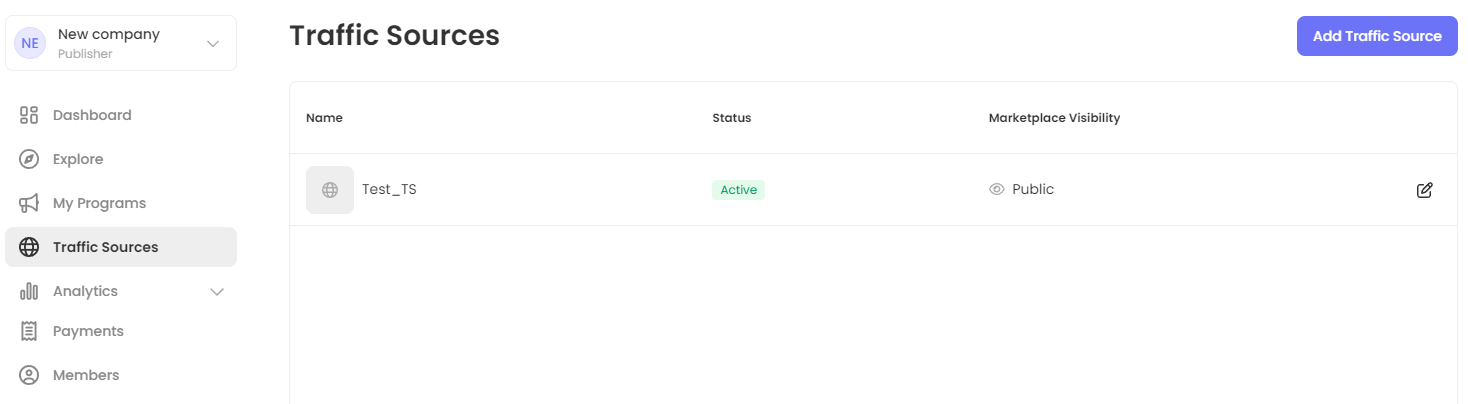
After the Traffic Source is saved, it is displayed in the Traffic sources list.
Editing a Traffic Source
Once added, the Traffic Source information can be updated any time in the Traffic Sources list, using 
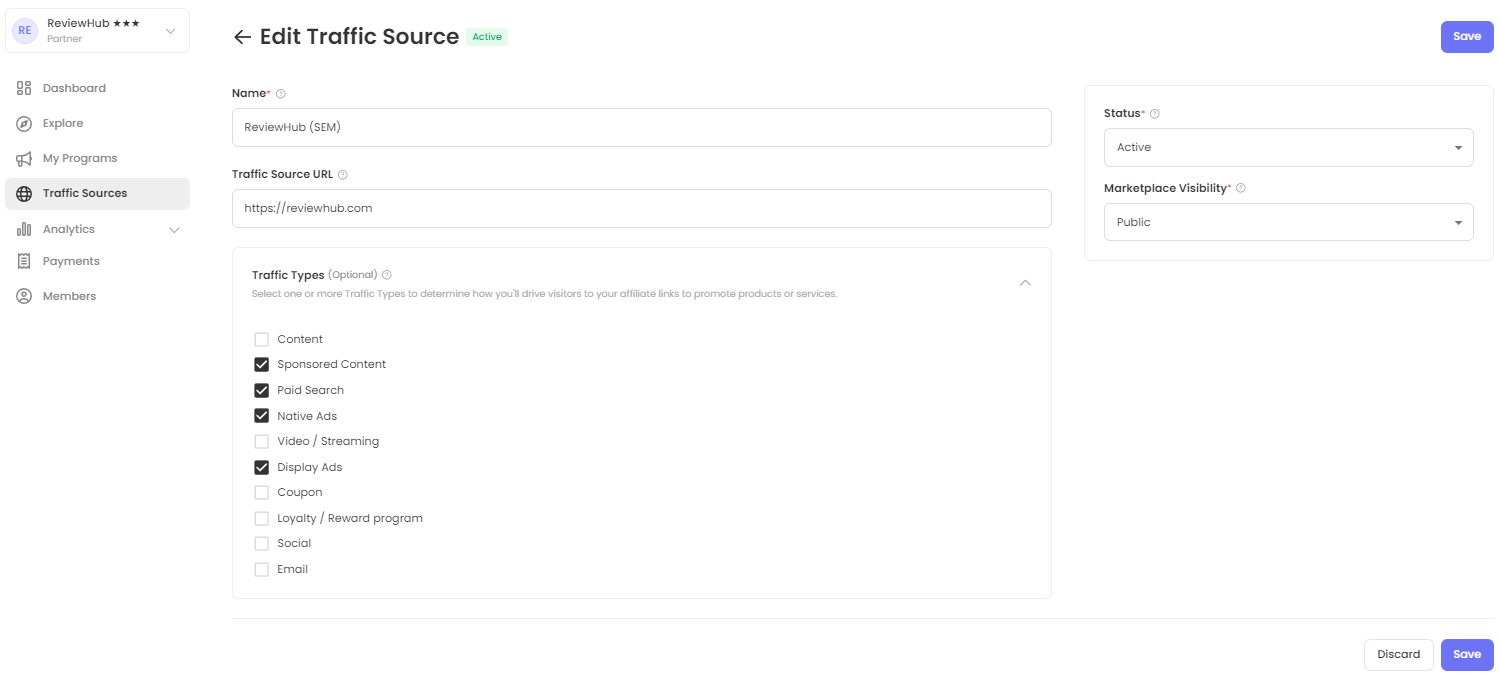
Press Save to save, or Discard to cancel the changes.
Blocked Traffic Sources
There is a third Traffic Source status - Blocked.
This status is invisible on the platform and can be set by Katalys employee only (e.g., in case Traffic source violates the platform rules).
When Traffic Source is set to Blocked, the Traffic Source is no longer visible on the platform, all the associated tracking links are immediately deactivated.
Both the Partner and collaborating Advertisers, using this Traffic Source in their programs will be notified about the blocking.
Partner will also see the blocked Traffic Sources in the Traffic Sources section:

Blocked Traffic Source can be unblocked by Katalys employee only.
Traffic Types
|
Traffic Type |
Tooltip Description |
|---|---|
|
Content |
Editorial content, blog posts, articles, reviews, organic listicles, etc. |
|
Sponsored Content |
Paid listicles, articles, blog posts, reviews, etc. |
|
Paid Search |
Services like Google Ads to bid on keywords, and display ads in search results. |
|
Native Ads |
Native Ads blend in with the surrounding content matching its look, feel, and editorial style. They aim to be non-intrusive, providing a more natural user experience. They look like part of the organic content. |
|
Video / Streaming |
Use video platforms like YouTube, Vimeo, Twitch, etc. to promote products or services. |
|
Display Ads |
Use Display Ads to promote products or services. Display Ads are visually distinct from the content around them, often in a form of banners, sidebars, or pop-up ads. They are designed to stand out and draw attention, making it clear that they are advertisements. |
|
Coupon |
Share discount codes and coupons to promote products or services. |
|
Loyalty / Reward Program |
Utilize Loyalty/Rewards programs to offer points, rewards, or cashback for purchases via affiliate links, incentivizing customer loyalty and driving sales. |
|
Social |
Organic traffic from social media posts and engagement. |
|
|
Traffic from email campaigns and newsletters. |